

The battle between legacy banks and challenger banks is redefining the future of financial services. On one side, legacy banks are backed by centuries of trust, stability, and vast resources; on the other, challenger banks—nimble, tech-powered, and customer-focused—are winning over a growing share of the market. With 43% of consumers now more inclined to use a challenger bank (rising to 62% among 18- to 24-year-olds), the challengers are landing major blows in the fight for customer loyalty.
In this article, we explore how the sector underdogs are leveraging innovative technology, transparent practices, and personalized services to disrupt traditional banking—and how legacy banks, despite their strong foundation, are struggling to keep pace. Who will ultimately win consumers’ trust, and what lessons can these contenders learn from each other?
“Ladies and gentlemen, welcome to tonight’s main event! In the blue corner, weighing in with centuries of heritage and a pervasive brick-and-mortar presence, we have the titan of tradition, the vault of the economy—give it up for… The Legacy Bank!”
[The audience whoops, lights flash, and a classic, polished suit enters the ring—reassuringly calm but slightly aloof—carrying an immaculate briefcase.]
“Aaaand in the red corner, alert and agile, charged with the energy of a thousand tech startups, our nimble underdog is redefining the rules of finance with digital tricks and a killer app! Let’s hear some noise for… The Challenger Bank!”
[The crowd erupts as a lithe figure in a hoodie, jeans, and sneakers springs into the ring, spinning a smartphone and exuding charm, smiling and playfully winking at onlookers.]
“Get ready for the clash of convention and innovation, in a battle where past meets future! Who will win consumers’ trust? Let’s find out!”
[Starting bell rings.]
The rise of challenger banks
Fresh faces are entering the ring of retail banking. Collectively dubbed “challenger banks,” these technology-powered niche banks, neobanks, and fintech firms are intent on going toe-to-toe with the industry heavyweights—and their popularity is rapidly growing.
In 2022, the Financial Conduct Authority reported that (challenger banks) Starling Bank and Monzo alone had grown their market share of personal current accounts to 8%. The 2023 iResearch Services Retail Banking Survey found 43% of consumers are more inclined to use a challenger bank or fintech provider than a traditional bank—rising to 62% amo ng 18- to 24-year-olds. Even more recently, Monzo, Starling Bank, and Chase emerged as the top-ranked personal account providers in Great Britain, according to the latest banking satisfaction survey from the UK Competition and Markets Authority (published August 2024).
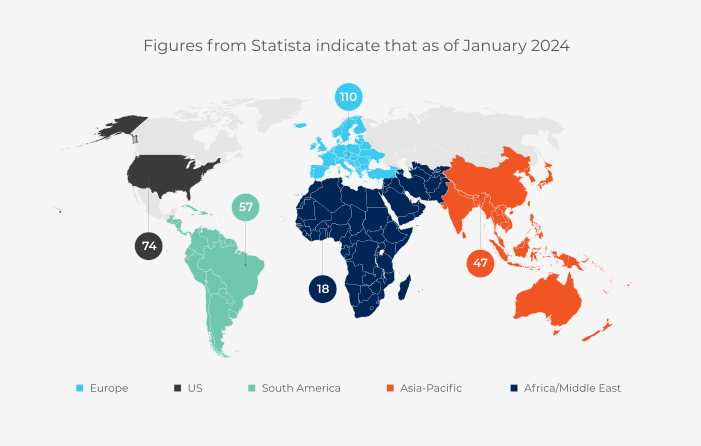
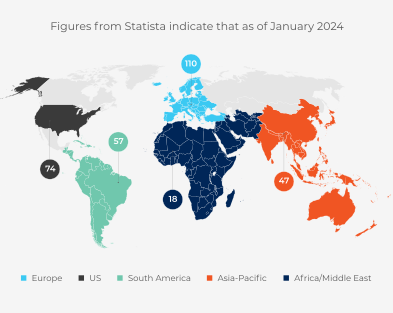
And peoples’ comfort with new forms of banking is only likely to increase as the number of choices grows. Figures from Statista indicate that as of January 2024, Europe has the largest number of challenger banks (110), followed by the US (74), South America (57), the Asia-Pacific (47), and Africa/Middle East (18).
Meet your challengers
There are several kinds of challenger bank, each striving for a common goal: disrupt traditional banking by offering more accessible, user-friendly services.
What’s so appealing about a challenger?
The iResearch Services Retail Banking Survey 2023 finds consumers’ top priorities when choosing a bank are the services it provides, the features and benefits it offers, and its deployment of user-friendly technology (see Figure 1, and read our retail banking technology review for more insights).
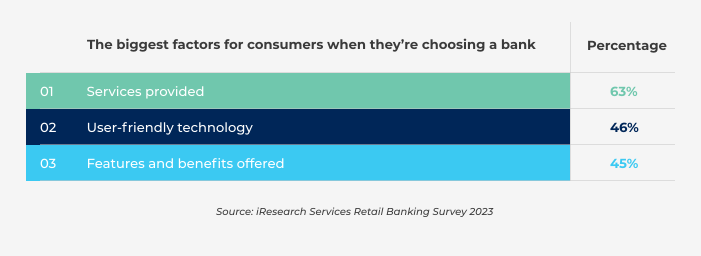
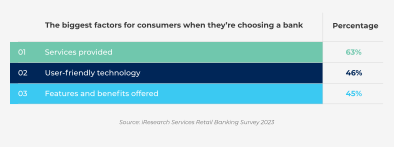
Figure 1. The top three factors for consumers when choosing a bank
Challenger banks are built to respond to these needs, offering focused solutions, personalized service and frequently updating their features and platforms: in fact, 44% of our respondents believe challenger banks offer better service than traditional banks.


Meanwhile, legacy banks start this bout on the ropes—encumbered by stringent regulation, hierarchical structures, and huge customer bases. For them, change must be approached cautiously, risk managed conservatively, and decisions made by committee.
Although widespread adoption of new technologies and practices across the industry is increasing, the stability of legacy banks works to their detriment.
Round one to the challenger!
Inclusive access keeps challengers on the front foot
For many, traditional banking isn’t always an option; World Bank Group estimates 1.4 billion people worldwide remain unbanked. Rural areas lack access to physical branches, while limited financial literacy can make navigating the financial system daunting.
This massive untapped market has presented challenger banks with an opening to compete with the global players. User-friendly interfaces simplify banking for those who might feel overwhelmed, and a focus on transparent, educational resources can empower customers to have direct control over their finances. An online- and often mobile-first presence is a huge advantage for reaching many underserved communities, who are more likely to have mobile internet than a fixed connection.
Take, for example, M-Pesa, a mobile money transfer, payment, and micro-financing service. Developed to solve a lack of money transfer options in Kenya, the platform now has 50 million monthly active users across seven countries.
Beyond that, rigid credit history checks and high fees can alienate customers with low incomes and tight budgets—in 2023, reputation monitor Caliber found nearly a third of consumers (31%) felt bank charges were too high.
But by keeping fees low and creating products specifically for varied credit histories and marginalized groups, challenger banks offer opportunities to people who have been left out by the legacy institutions. As World Bank puts it: “The ongoing digitization of financial services and money creates opportunities to build more inclusive and efficient financial services and promote economic development.”
It’s another challenger win in round two.
What’s powering challenger success?
Challenger banks and neobanks are using a huge variety of innovative technologies to stay nimble.
App access is the entry requirement—in 2023, Boston Consulting Group reported a decline in online banking (via browser), but an increase in the use of mobile banking. Customers expect to manage their accounts, make payments, and access specific financial tools conveniently. This extends to digital wallets for easy payments, transfers, and storage of digital cards, credit, and currencies.
Behind the screens, challenger banks are using cloud computing for scalability, flexibility, and cost-efficiency, enabling rapid deployment and updates. Their feedback loops are informed by advanced data analytics, helping challengers understand customer behavior and optimize their offerings accordingly.
And instead of withholding proprietary technology, many challengers are finding ways to quickly integrate with the economic ecosystem. This might mean licensing their product directly to clients or connecting with other services through open banking and API integration. Chime, for example, works with national banks to provide users with no-fee accounts and services, while Uplift is a buy-now-pay-later (BNPL) service tailored to travel companies.
Customers can benefit from easier access to conventional products, and reach multiple accounts, services, payments, and reports from a single portal, positioning the challenger firm as the “go-to” platform for a complete financial overview.
Without the regulatory and stakeholder obligations faced by their heavyweight opponents, challengers can provide efficient, user-friendly, and cost-effective banking experiences that meet customer needs in an instant.
Parrying the blows
But the defending champions aren’t about to throw in the towel, and legacy banks bring some heavy-hitting advantages—like heritage and stability—to the ring.
Trust is an essential part of customers’ relationships with their banks, and firms that are backed by longstanding reputations will appeal to customers who want extra reassurance that their livelihood, mortgages, and long-term investments are safe. That trust is enhanced by face-to-face interactions, which as we know, many customers still value. Most major banks invest in having a strong physical presence that is simply not feasible for most challenger operating models.
This reflects another major advantage for the legacy banks in comparison with the challengers: immense resources. As McKinsey reports, the North American asset management industry alone had a record total of $132 trillion worth of assets under management as of June 2024.
And it’s not just financial resources; customers are accustomed to turning to their legacy banks for a variety of needs—whether it’s buying a house, investing in stocks, or securing a business loan. Moreover, banks maintain continuous and reliable service through large in-house teams dedicated to regulatory compliance, customer service, IT support, and fraud and cybersecurity. Challengers can’t always keep up—just last month, the FCA fined Starling Bank more than $37 million (£29 million) for inadequate security protocols.
Built on long-established asset bases and revenue streams, legacy banks can weather regulatory disruption and economic downturns more effectively than challengers, winning many bouts by sheer attrition.
When the contest comes down to long-standing trust—the round must be awarded to the incumbent.
Can challenger banks maintain the upper hand?
Backed by centuries of experience and generations of consumer investment, legacy banks stand resilient even against market challenges and reputational blows. The trust they’ve established with their customers can’t be easily replicated—no matter how many gritty training montages the new challengers sweat through.
But as the legacy players recover from a flurry of economic blows—the pandemic, international conflict, financial crashes—they’ve left themselves open.
Challenger banks have come out swinging with targeted products powered by agile technology and, as they continue to innovate and expand their service offerings, challengers pose a real threat. The deployment of tech, especially when coupled with transparent fees and real-time alerts, has inspired and resonated with consumers—particularly those previously excluded by traditional banks.
As the digital economy evolves, it’s clear neither contender will go down without a fight. But to maintain a competitive edge, legacy banks should take some moves from their rivals, like demonstrating deeper consumer understanding and stepping up their hybrid and tech-first service models. In short—it’s time for the legacy banks to hit the gym.
