

Trust, transparency, and technology are reshaping financial services, but not without challenges. Despite 70% of consumers believing their banks act in their best interest—a significant increase from 2020—30% remain uncertain.
As the expectation of digital security rises (with 88% of consumers relying on banks to safeguard their data), the pressure is on institutions to close the confidence gap. What sets trusted banks apart? And how can they leverage transparency and technology to build loyalty?
Financial-sector growth hinges on a complex interplay of trust, transparency, and technology. Separately, these elements are competitive differentiators between brands; in combination, they are the pillars of modern banking, underpinning a resilient financial ecosystem where consumers are empowered, institutions are held accountable, and the overall stability of the sector is reinforced.
Trust is the fundamental mechanic of this system. Whether it’s a personal account or business funds, customers want to feel sure that their money—their future—is in safe hands. Only with consumer trust can financial institutions fully participate in economic markets, making it a critical objective for banks to establish and maintain the confidence of their customers.
Thought leadership is a powerful way to build trust in financial services, giving firms a platform to share guidance with consumers and reinforce their commitment to transparency. Our report on thought leadership trends in financial services incorporates critical data and insights on how thought leadership content is created, read, used and marketed.
Consumer trust continues to rise in 2023
Financial institutions have been on a long journey of rebuilding consumer confidence since the 2008 financial crisis. Regulatory reform has improved the sector’s transparency and customer protection, and increased financial literacy and the rise of fintech have empowered customers when it comes to choosing financial products and managing their money. However, the public generally remains wary of fluctuating economic conditions, and confidence is sensitive to emerging challenges.
The iResearch Services Retail Banking Survey 2023 reveals that seven in ten respondents believe their bank is acting in their best interests (Figure 1). Despite inflation, economic turbulence, and geopolitical instability, this figure is up from 63% in 2020, indicating that confidence in financial institutions is generally secure. An Ipsos poll shows a similar trend, finding that trust in banking worldwide increased by 9% from 2019 to 2023.
Gaining the trust of the remaining 30% of consumers will require banks to increase their communication, improve customer education, and find ways to build relationships through personalized customer service.


Figure 1. Do customers believe their banks act in their best interests?
A close-up on consumer trust
This belief that banks are acting in the best interests of their customers is relatively consistent across age groups, though it peaks at 76% among 30- to 39-year-olds and drops to around 60% among consumers aged 60+ (Figure 2).
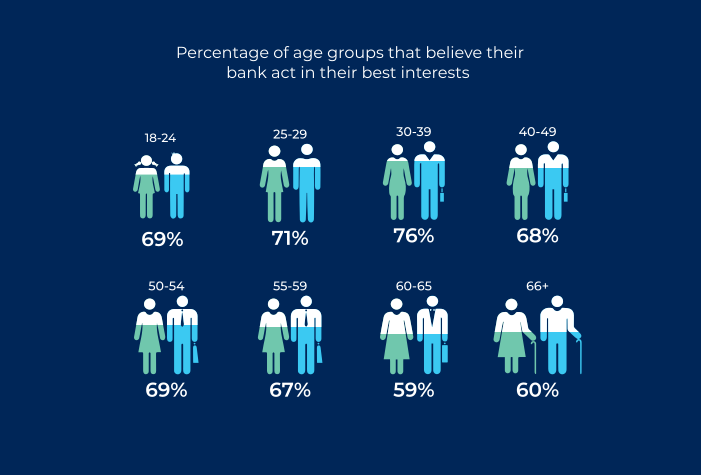
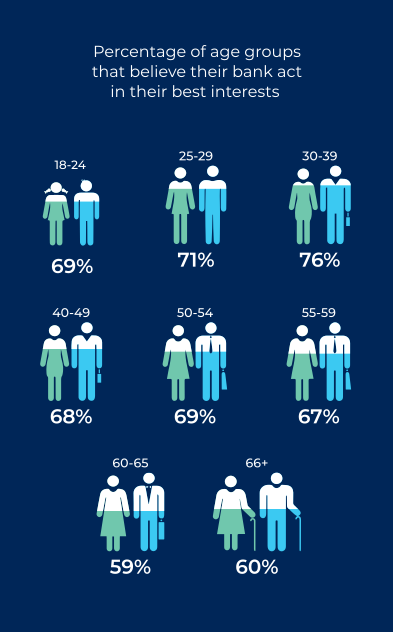
Figure 2. A chart showing the breakdown of trusting consumers by age group
Geographically, consumers in South America (87%), as well as Mexico (83%) and the US (80%), are most likely to say their banks acts in their best interests, while those in Portugal (43%), as well as France, Italy, and Benelux (all tied at 52%), are the least likely to say so.
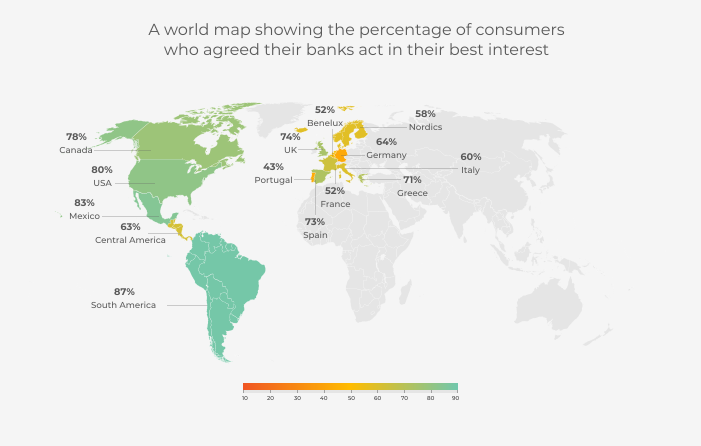

Figure 3. A world map showing the percentage of consumers who answered “yes” to their banks acting in their best interest per region; on a color scale from red (lowest percentage) to green (highest percentage).
However, Portugal and Benelux also have the highest proportion of consumers who are unsure about how their bank acts in relation to their interests—30% and 24%, respectively. For many consumers, communication is an important factor when it comes to choosing their bank, and this uncertainty suggests an opportunity for institutions to improve customer confidence and loyalty through better transparency.
The next era for trust: Digital banking
In today’s digital era, money isn’t the only valuable thing people want their banks to keep safe; 89% of consumers express at least some degree of concern about the safety of their online data.
At the moment, banks are in a good position, with 88% of consumers currently trusting their bank with their data when using services such as online banking or digital payments (Figure 4). Data protection is a critical aspect of consumer confidence, and banks are expected to have robust, legally compliant data management and security. EPAM Continuum’s 2024 Consumer Banking Report finds a similar pattern–four in five customers trust their bank to keep their data safe—and reports that, of those who don’t trust their banks, half are concerned by other public breaches.
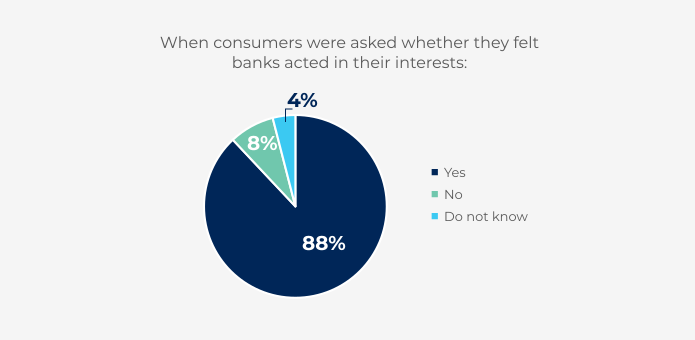
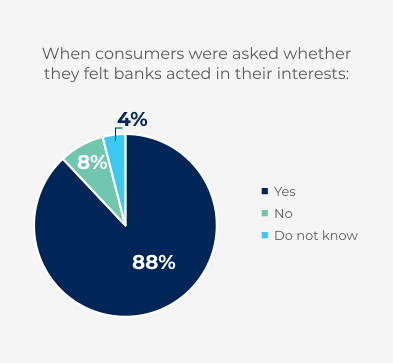
Figure 4. A pie chart showing whether consumers trust their bank with their data
Both traditional banks and fintechs will benefit from increased transparency as they adhere to new and expanded regulations across various jurisdictions. These enhanced transparency requirements will likely mandate more frequent and comprehensive reporting on financial institutions’ operations, risk management practices, and financial health, as well as progress toward non-financial priorities such as reducing carbon emissions.
But the payoff will be significant; EPAM Continuum finds that 91% of consumers cite the protection of their personal data as the most important capability their banks could offer. High levels of disclosure will not only help build consumer trust in the brand but—properly managed and executed—also facilitate financial institutions’ efforts to streamline internal processes, improve corporate governance, attract investors, and even stoke innovation.
Building consumer trust
When it comes to building positive relationships with customers, the three Ts are intrinsically linked. Trust in financial services is enhanced and informed through transparency, which in turn can be promoted and protected by technology.
The iResearch Services Retail Banking Survey 2023 finds that consumer confidence in banks is high. The sector is in a strong position to reassure cautious consumers and close the trust gap–and, in doing so, bring further stability to the economic ecosystem, even in times of uncertainty.
So, what distinguishes a well-trusted bank? The Fairer Finance Trust in Banking Index 2024 finds strong correlations between trusted institutions and the satisfaction of digital services customers and current account customers, as well as how positive customers are about the informativeness of their provider’s communications.
