

Technology has revolutionized consumer banking, from the ATM’s debut in 1967 to today’s fully digital experiences. With 94% of consumers now comfortable managing their money online, digital banking is the new normal. Yet, as 43% of customers rarely—or never—visit branches, the question remains: can technology completely replace in-person service when it comes to more complex, personalized needs?
This article uncovers the critical gaps in digital banking satisfaction, the surprising value of human connection, and the strategies banks must adopt to stay ahead in a tech-driven future.
Sixty years ago, personal banking was… burdensome. Even the most straightforward transactions had to be done over the counter, so simply topping up your wallet meant dashing to your local branch during its limited open hours and waiting in line for an hour with a dozen other patrons doing the same thing.
Everything changed in June 1967. With the launch of the automated teller machine, the banking world experienced its first leap of digitization. The ATM rapidly revolutionized our relationship with banking, and today there are an estimated 3.2 million cash machines worldwide.
Now, technology is at the core of financial services. Customers can access their accounts anytime, anywhere, thanks to the advent of smartphones. Systems like AI and machine learning have helped personalize customer service, and processes such as biometrics and blockchain promise enhanced security and transparency. And banks can utilize all of this to gain vast amounts of data to tailor products and services that boost satisfaction, loyalty, and profits.
As financial technology advances at record speeds, digital banking is only the beginning.
Banking anytime, anywhere
Digital banking is an essential part of our hyper-connected lives. Apps and browsers give customers 24/7 account access —instant transfers and updates, mobile check deposits, real-time transaction alerts, and virtual assistance whenever they need it.
Digital banking is the new normal
The adoption of digital banking has been comprehensive. Forbes Advisor’s 2022 Digital Banking Survey found that 78% of US adults prefer to bank via a website or app, and YouGov data from July 2024 indicates 69% of Brits are accessing their bank online at least once a week, if not daily.
The iResearch Services Retail Banking Survey 2023 finds that the vast majority (94%) of consumers are comfortable using an app or browser to manage their money (see Figure 1), and four in five (43%) respondents claim to rarely—or never—visit branches in person anymore. This is consistent across generations, challenging any assumptions that older people may be less comfortable with technology than younger consumers.
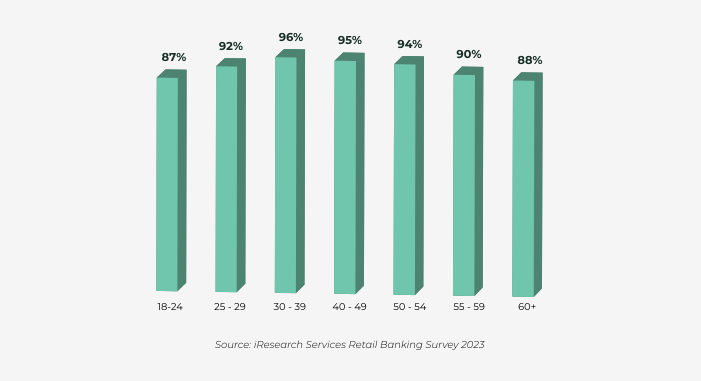
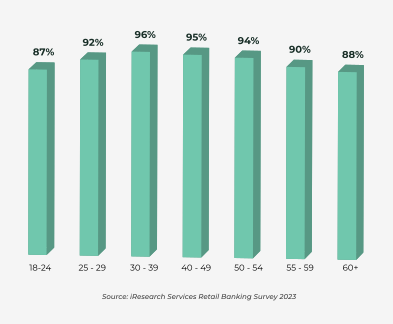
Figure 1. Percentage of customers who are comfortable using online banking (via a web browser or application)
A closer look at specific banking activities finds that customers are broadly happy with managing their money online (78%), online customer service (75%), and the range of services available (74%). However, satisfaction drops when it comes to more complex banking needs—more on that later. Again, there are no significant differences between age groups, highlighting how important seamless digital experiences are for a bank’s entire customer base.
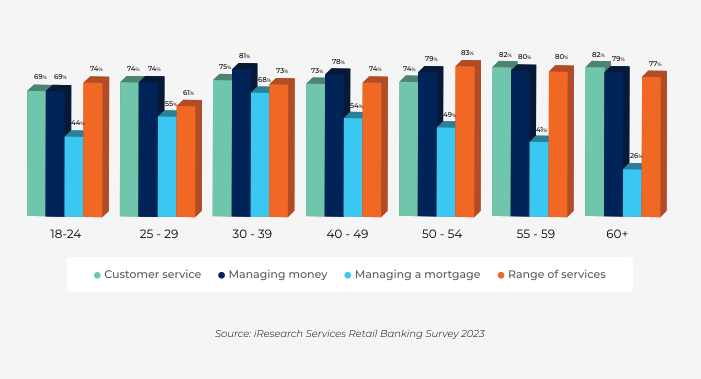
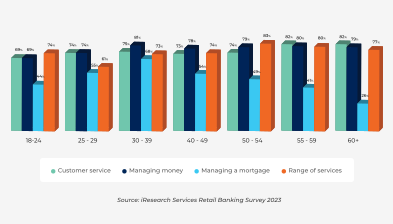
Figure 2. Percentage of satisfied customers with each online banking services
Understanding customer needs—and proving it
Banks are right to prioritize online functionality, given one of customers’ top-ranking factors when choosing a bank is user-friendly technology (see Figure 3.) This customer perception is critical; McKinsey & Company’s 2023 study of experience-led growth in banking shows strong links between customer satisfaction and key business outcomes, including shareholder return, growth, and reduced costs. Satisfied customers not only purchase more products from their bank but are also less likely to switch.
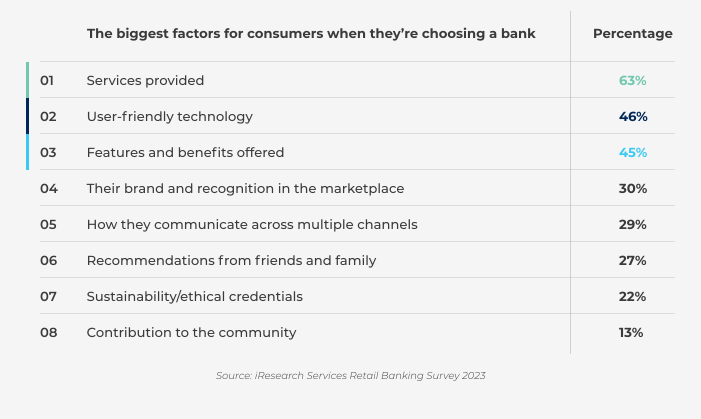
Figure 3. The biggest factors for consumers when they’re choosing a bank
Complex challenges benefit from simpler solutions
But there’s a catch. As customers head for bank websites over bank branches, it’s becoming increasingly difficult for doors to stay open: figures from Accenture show that 17% of US banks and 35% of European domestic branches shut between 2011 and 2021 (a trend likely accelerated by the pandemic).
This is notable because digital services struggle to fill the gap when it comes to complicated transactions. According to the same Accenture study, the majority of online traffic is for simple tasks—in fact, for 63% of consumers, most online banking logins are just to check balances. As shown in Figure 2, our survey reveals that customer confidence plunges when it comes to business such as managing mortgages online. Customers aren’t dissatisfied (see Figure 4)—but they’re not yet confident about completing more complex requests through technology alone.
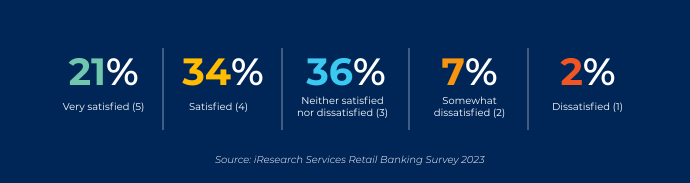

Figure 4. Responses to “Are you currently satisfied by the online experience you have received from your bank in managing a mortgage?”
Making personal finance, personable finance
If banking is not to become fully digital, financial service providers must find ways to support customers with complex needs. This is particularly important for both younger and older customers, who, according to our study, are more likely to report dissatisfaction with the current state of online banking. Understanding different customers’ challenges with technology or unfamiliar products presents a valuable opportunity for banks to tailor their services and strengthen relationships with these demographics.
What could that look like? Research by Sinch found that while 76% of consumers have interacted with chatbots (up from 48% in 2019), 95%—almost all of them—wanted to be able to switch from a messaging chat to a voice call with a human instantly. To maintain and improve customer satisfaction, the boundaries between human and online services need to be regularly assessed and adjusted to cater for those that need more personal advice.
Click and connect: The future of banking in the digital age
In 2021, research by the Economist Intelligence Unit and Temenos found that 65% of bankers believed the branch model for banking would be ‘dead’ within five years. As we approach the end of 2024, that future is not a foregone conclusion, but retail banking has challenges to overcome yet.
For technology to really fuel change, it needs data—and this is where things begin to get tricky. Our 3T’s series highlights that, while customers generally trust their banks with their data, there remains a pressing need for transparency about what happens with the information they collect. As data dependency grows, so must banks’ continuous pursuit of consumer trust. Technology— like biometrics and encryption—is a valuable tool to do this.
The future of technology and banking could include:
Now that most financial services providers have established their online presence, it’s imperative they cast their technological net further to protect and replenish the diverse range of service and communication that customers need. The ATM was an incredible disruptor to the way we manage our money—how will today’s digital innovations continue that legacy in customer convenience?
